EMPLOYER ROLE GUIDE
Role overview
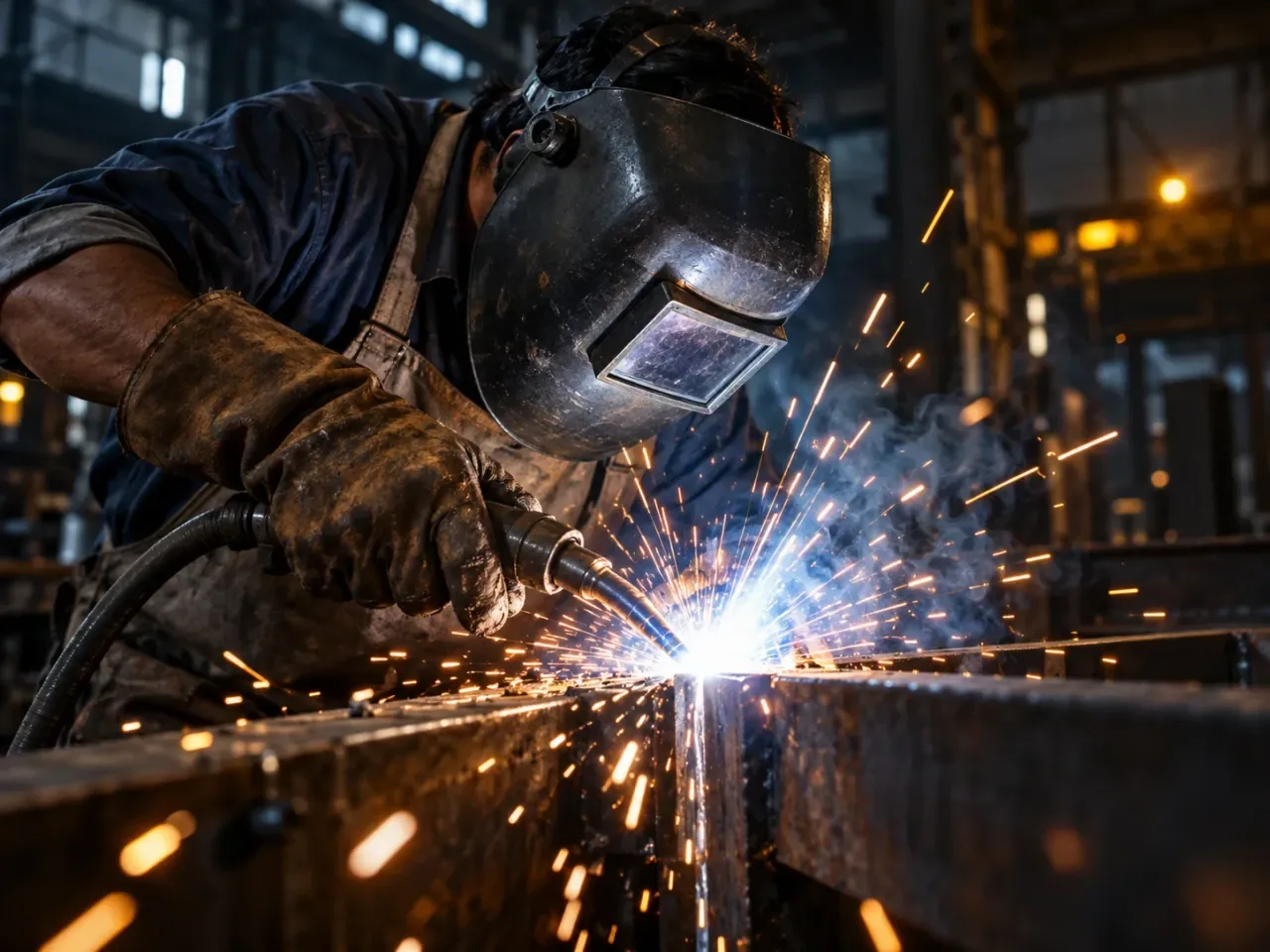
Welders join metal components for structures, fabricated products and pipework. A useful hiring brief identifies the material, welding process, joint configuration and production conditions. Workshop fabrication and site pipe welding demand different evidence, even when candidates share the same job title. Agree how weld quality will be assessed before selecting a candidate.
Core responsibilities
Read the assigned drawing and welding instructions, identify the joint and check that materials and consumables match the work package.
Prepare edges, assist with fit-up and check alignment before welding; report preparation issues that could affect the finished joint.
Complete weld runs within the approved procedure and assigned scope, maintaining consistent technique as access and position change.
Clean completed work, perform assigned visual checks and record identification or repair information for the employer’s inspection process.
KEY CAPABILITIES
Skills to assess
Process and material knowledge
Assess the actual SMAW, GTAW/TIG or GMAW/MIG work involved. Ask candidates to explain their previous material thicknesses, consumables and process limitations rather than treating a list of process names as proof.
Drawing and joint preparation
Use a simple drawing to explore weld symbols, joint access and fit-up checks. Distinguish independent preparation from work completed with a fitter or under close supervision.
Quality awareness
Discuss visible defects, how a suspect weld is reported and who authorises repairs. A welder’s visual checks support the quality system but do not replace required inspection or testing.
Experience & qualifications
Education & training
Trade training and recent process-specific qualification records may be employer preferences or project requirements. Verify the issuing body, qualification range and continuing validity where applicable. Destination rules and the project’s fabrication code must be checked separately; a certificate is not universal permission to weld every joint.
Relevant experience
Review comparable materials, positions and access conditions, using a work history discussion and practical test. Do not substitute a fixed number of years for evidence that the candidate can perform the specified joint consistently. For initial screening, an employer might prefer 2–3 years on comparable welding processes for independent production work; treat this as an adjustable preference and let the practical assessment establish suitability.
Choose the right level
- Supervised production welder
- Completes a defined range of repeat joints with available supervision and established setup instructions.
- Specialist or lead welder
- Handles assessed complex joints or helps coordinate welding work; inspection and supervisory authority remain explicitly assigned.
Tools & working environment
Clarify welding power sources, torches, grinders, extraction, positioning aids and inspection gauges. State whether work takes place in a fabrication bay, outdoors, at height or within a specially controlled space.
Safety & site readiness
- Plan fume control and task-appropriate respiratory protection through the employer’s exposure assessment.
- Provide suitable eye and skin protection, welding screens and controls that protect nearby workers from arc exposure.
- Define hot-work precautions, cylinder handling and fire-watch arrangements before the task begins.
YOUR HIRING BRIEF
What employers should consider when hiring
Plan the welding crew
Estimate headcount by joint volume, process mix and inspection hold points, including fitters and supervision where needed. Clarify shift coverage, contract duration and the working language for drawings, permits and handovers.
Specify the test joint
Give the assessor the process, material, thickness, position and acceptance criteria. Record preparation, technique and finished result separately.
Check production fit
Discuss batch size, repair procedures and drawing changes. Use an example of a fit-up problem to assess when the candidate stops and seeks clarification.
Confirm inspection interfaces
Identify who releases work, requests testing and approves repairs. Include traceability and shift handover expectations in the job brief.
Plan recruitment & mobilisation
The stages below are planning checkpoints. Aaroham coordinates sourcing, assessment, documentation and arrival support within the agreed service scope. Employers make selection decisions; authorities decide permissions.
Define the requirement
Agree duties, headcount, work location, employment terms and the assessment standard before sourcing begins.
Screen, assess & select
Review relevant evidence, agree practical or technical assessments and arrange employer interviews. Record the selection decision and any training gaps.
Review documents & readiness
Confirm role-specific records, applicable permissions and who owns each step. Keep proposed travel dates conditional on the necessary decisions.
Prepare for arrival
Confirm induction, supervision, accommodation and arrival contacts. Agree ongoing support and responsibilities in writing.
Employer questions
Does a 6G qualification cover every welding job?
No. Qualification scope depends on the applicable scheme and variables such as process and material. Check the actual record against the proposed work.
Can one test assess TIG and MIG ability?
A test in one process does not establish competence in another. Assess each process that the worker will actually use.
Should welders also carry out final inspection?
Define routine self-checks separately from formal acceptance. Final inspection may require independent personnel or additional qualifications under the project’s quality arrangements.
Occupational references
References inform the occupational guidance. Local rules, licensing and employer requirements must be checked for the actual destination and duties.