EMPLOYER ROLE GUIDE
Role overview
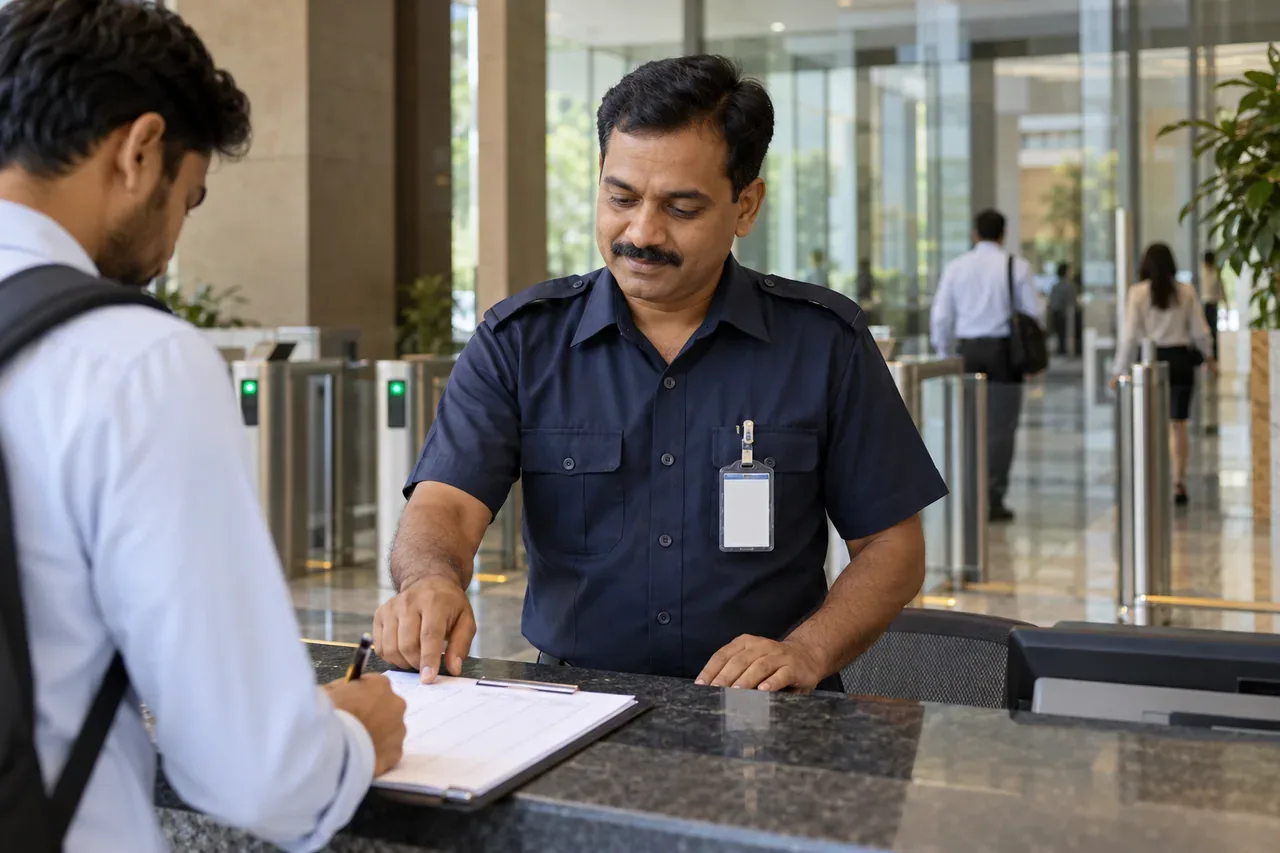
Security guards support access control, observation and incident reporting at assigned premises. A reception post, warehouse gate and mobile patrol need different routines and communication skills. This guide concerns ordinary unarmed site security; specialist, armed or high-risk protective assignments require a separately defined and verified scope.
Core responsibilities
Check access requests against site instructions and refer exceptions to the authorised contact without improvising permissions.
Patrol assigned areas or monitor permitted systems, recording unusual conditions and responding through the site escalation plan.
Maintain clear visitor, key or incident records while protecting personal information and limiting access to authorised users.
Hand over outstanding incidents, equipment faults and temporary instructions so the next shift understands the current site situation.
KEY CAPABILITIES
Skills to assess
Observation and reporting
Use a short fictional incident to assess factual description, sequence and separation of observation from assumption. Written reports should be usable by the employer without exaggeration.
De-escalation
Role-play a visitor disputing an access decision. Assess calm communication, distance and appropriate help-seeking rather than confrontation or promises beyond the guard’s authority.
Post discipline
Discuss alarms, keys and relief arrangements. Candidates should know how to report a fault or request cover without leaving a critical post unstaffed.
Experience & qualifications
Education & training
Verify destination licensing, approved training, background checks and eligibility through the applicable authorised process. Requirements differ by security activity. Previous military or security work may be relevant experience but does not automatically establish local licensing or lawful authority to search, detain or use force.
Relevant experience
Match candidates to the site and public-contact demands. Gatehouse logistics experience differs from retail or healthcare security. For new entrants, plan supervised post training and report-writing support; a control-room position needs assessed alarm handling and system familiarity. A trained entry post may suit 0–1 years of experience, while a supervisory brief might prefer 2–3 years in a comparable site environment. These are suggested employer preferences, separate from licensing and eligibility.
Choose the right level
- Site security officer
- Follows defined post orders with clear escalation and relief arrangements.
- Shift supervisor
- Coordinates coverage, checks records and supports incident communication within the employer’s authority structure.
Tools & working environment
Describe radios, access-control systems, visitor registers, CCTV where authorised and patrol-record tools. Explain outdoor exposure, standing or walking demands, night work and the arrangements for welfare facilities at remote posts.
Safety & site readiness
- Give clear emergency contacts and procedures for requesting help; do not expect guards to handle dangerous incidents alone.
- Define lawful limits and employer policy for intervention, searches and recording personal information.
- Plan lone-worker checks, lighting, safe patrol routes and fatigue-aware shift arrangements.
YOUR HIRING BRIEF
What employers should consider when hiring
Write post orders first
State what the guard protects, who approves exceptions and how incidents are escalated. Separate reception tasks from enforcement expectations.
Assess communication in context
Use an access dispute and a written incident note in the required working language. Evaluate clarity and judgement rather than physical appearance or unsupported confidence.
Calculate real coverage
Start with posts and operating hours, then account for breaks, leave, training and supervisors. A continuously staffed post requires relief planning beyond a single named worker.
Plan recruitment & mobilisation
The stages below are planning checkpoints. Aaroham coordinates sourcing, assessment, documentation and arrival support within the agreed service scope. Employers make selection decisions; authorities decide permissions.
Define the requirement
Agree duties, headcount, work location, employment terms and the assessment standard before sourcing begins.
Screen, assess & select
Review relevant evidence, agree practical or technical assessments and arrange employer interviews. Record the selection decision and any training gaps.
Review documents & readiness
Confirm role-specific records, applicable permissions and who owns each step. Keep proposed travel dates conditional on the necessary decisions.
Prepare for arrival
Confirm induction, supervision, accommodation and arrival contacts. Agree ongoing support and responsibilities in writing.
Employer questions
Can overseas security experience replace local licensing?
No assumption should be made. Confirm the destination’s licensing and recognition requirements for the exact security activity.
Should guards also operate CCTV?
Only where the role includes it and training, access permissions and privacy procedures are established.
Can a guard be asked to manage every emergency?
The site plan should define limited first actions and escalation to trained responders. Recruitment does not create emergency-service authority.
Occupational references
References inform the occupational guidance. Local rules, licensing and employer requirements must be checked for the actual destination and duties.