EMPLOYER ROLE GUIDE
Role overview
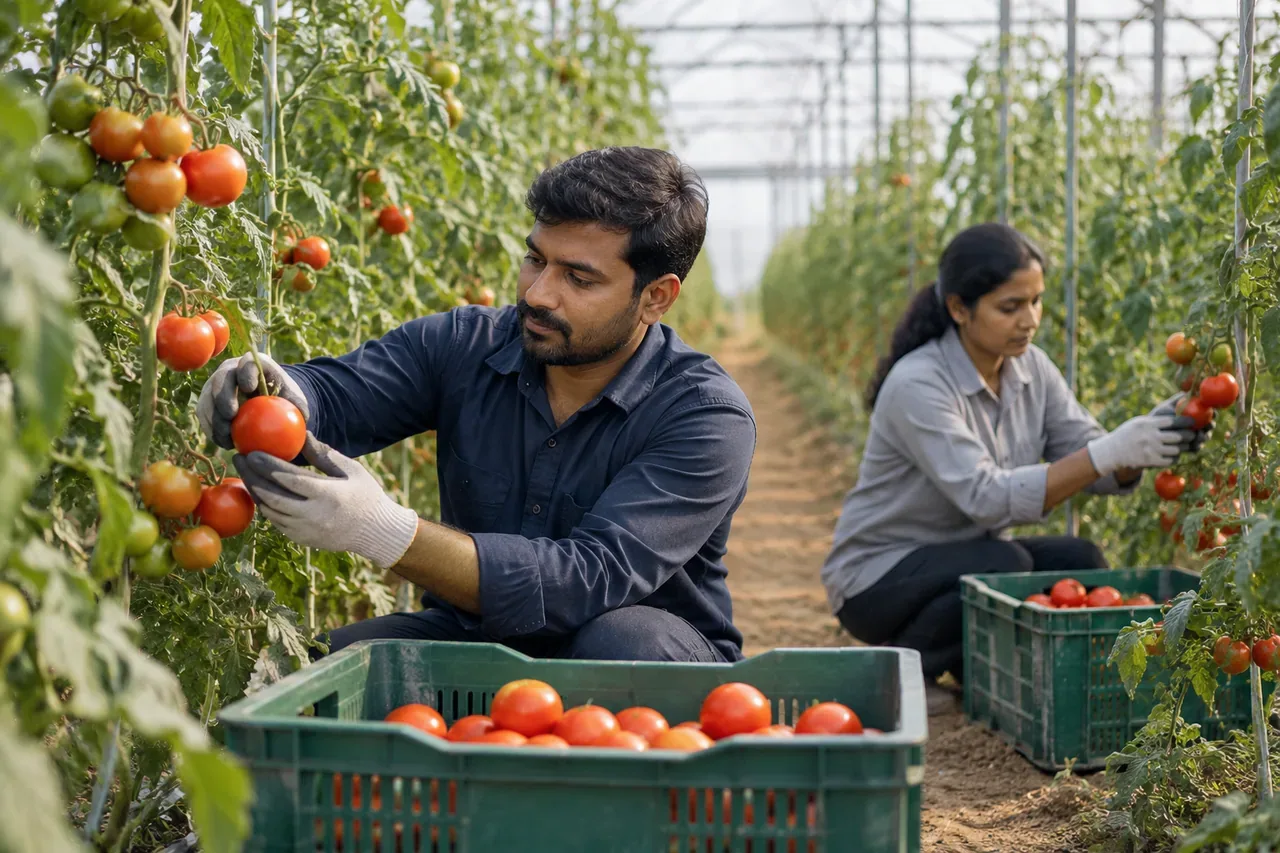
Agriculture workers support crop, nursery or livestock operations through tasks that change with the production cycle. The crop, growing system and season matter more than a broad farm-work title. Employers should separate general field labour from machinery, chemical application and animal-care duties, then explain the training and supervision available for each.
Core responsibilities
Carry out assigned planting, tending, harvesting or livestock-support tasks to the farm’s work instructions and quality expectations.
Handle produce, plants or supplies carefully, maintaining identification and avoiding damage or contamination during movement.
Observe crops, equipment or animals within the assigned role and report unusual conditions to the responsible supervisor.
Clean permitted tools and work areas, record assigned quantities or observations and communicate unfinished work at the end of the shift.
KEY CAPABILITIES
Skills to assess
Crop or enterprise familiarity
Ask candidates to describe the crop, growing conditions and tasks they previously performed. Experience in protected cultivation may differ substantially from field harvesting or livestock work.
Quality judgement
Use photographs or sample produce to discuss maturity, damage and grading criteria. Assess careful handling and willingness to ask about unfamiliar acceptance standards.
Task communication
Demonstrate a short instruction and ask the candidate to explain it back. Include how they would report a damaged tool, irrigation problem or animal welfare concern.
Experience & qualifications
Education & training
Many general tasks are taught on the farm, while vocational agriculture training may help for specialised assignments. Machinery operation, pesticide application and particular animal procedures can involve separate local requirements and employer authorisation. Do not infer permission for these duties from general agricultural experience.
Relevant experience
Match candidates to the specific crop, terrain and production method. New starters may suit supervised harvesting or sorting, while machinery and livestock tasks need relevant evidence. Discuss physical demands, seasonal changes and realistic training needs before selection, rather than assuming rural background establishes all required skills. For supervised general tasks, an employer may consider first-season workers. One or two completed seasons with the same crop can be a useful preference for experienced harvesting roles, without implying machinery or chemical authorisation.
Choose the right level
- Seasonal or general farm worker
- Completes trained tasks with clear daily instructions and accessible supervision.
- Experienced crop or farm team member
- Handles a defined range of enterprise-specific tasks and supports continuity as work changes through the season.
Tools & working environment
Specify hand tools, irrigation systems, packing areas and any authorised machinery. Explain outdoor exposure, greenhouse conditions, terrain, travel between fields and whether the assignment involves animals; each changes the induction and welfare arrangements needed.
Safety & site readiness
- Plan drinking water, shade or weather protection and appropriate rest arrangements for the actual conditions.
- Keep workers clear of moving machinery and provide training before any authorised equipment use.
- Explain chemical restrictions, hygiene, biosecurity and animal-handling boundaries relevant to the farm.
YOUR HIRING BRIEF
What employers should consider when hiring
Map the season
Describe planting, maintenance and harvest phases with proposed headcount for each. Treat dates as planning assumptions affected by crop and weather conditions.
Assess a representative task
Use safe grading, handling or instruction-following exercises. Keep machinery and chemical assessments separate and under appropriately qualified supervision.
Plan daily logistics
Explain transport, accommodation, welfare facilities, working hours and payment terms clearly. Provide a communication route for weather changes, welfare concerns and revised work instructions.
Plan recruitment & mobilisation
The stages below are planning checkpoints. Aaroham coordinates sourcing, assessment, documentation and arrival support within the agreed service scope. Employers make selection decisions; authorities decide permissions.
Define the requirement
Agree duties, headcount, work location, employment terms and the assessment standard before sourcing begins.
Screen, assess & select
Review relevant evidence, agree practical or technical assessments and arrange employer interviews. Record the selection decision and any training gaps.
Review documents & readiness
Confirm role-specific records, applicable permissions and who owns each step. Keep proposed travel dates conditional on the necessary decisions.
Prepare for arrival
Confirm induction, supervision, accommodation and arrival contacts. Agree ongoing support and responsibilities in writing.
Employer questions
Can crop workers also work with livestock?
Not without assessing the additional animal-handling, welfare and biosecurity responsibilities. Treat the enterprise change as a distinct training need.
Does farm experience permit pesticide application?
No automatic permission should be assumed. Check destination requirements, task-specific training and employer authorisation.
How should a seasonal recruitment request be prepared?
Name the crop, tasks, expected season, staffing phases and living arrangements, while keeping start dates conditional on recruitment and applicable permissions.
Occupational references
References inform the occupational guidance. Local rules, licensing and employer requirements must be checked for the actual destination and duties.